Return to Tech Notes Menu Page

SSS Online is your RF, Wireless, and SS Source!
Topical Menus:
   SSS Online Ezine
   Spread Spectrum
   RF Topics
   Wireless Topics
   Design Topics
   Design Tools
   Software Downloads
   Reference Material
   Ham Topics
   Fun & Games
   Links
   Assorted Topics
   Community Topics
   Site Info
   Home


This site is managed by: Visit Pegasus Technologies
Pegasus Technologies Menu
Contact Us


Search
Google

Search site
Search Web
Join our email list!

Leave a Comment

Sign our Guestbook


Visit our Sponsors:


Find electronics at eBay


Spread Spectrum Scene 

A Brief Introduction to Oscillator Design


Oscillators are used in almost all Spread Spectrum, RF and wireless systems -- thus designers should know something about them. The "Beginner's Box" below graphically presents the most important design information concerning oscillators. In addition, we have included a variety of other links to help you learn more about this fascinating subject. Just click on a link below:


  Contents of This Page

Basic Oscillator Theory
Related Pages on SSS Online
Download Some Articles on Oscillator Design
Interesting Web Links on Oscillators
Article: NEL Spread Spectrum Technique Measurably Reduces EMI
Description of Oscillator Types
Oscillator Terminology & Considerations
Reference Books about Oscillators


Some Very Basic Oscillator Theory:

Oscillators are a natural and expected part of the electronic scene. They occur in many, many applications and make possible circuits and subsystems that perform very useful functions. Oscillators occur sometimes even when we don't want them -- amplifiers can oscillate if stray feedback paths are present. Without oscillators we would probably live in a very dull world!

Oscillation occurs when an amplifier is furnished with a feedback path that satisfies two conditions:


  1. Amplitude Condition -- The cascaded gain and loss through the amplifier / feedback network must be greater than unity!

  2. Phase Condition -- The frequency of oscillation will be at the point where loop phase shift totals 360 (or zero) degrees!
In most oscillator circuits, oscillation builds up from zero when power is first applied, under linear circuit operation. However, limiting amplifier saturation and other non-linear effects end up keeping the oscillator's amplitude from building up indefinitely. Thus, oscillators are not the simplest devices in the world to accurately design, simulate or model. There is a real art to GOOD, STABLE oscillator design. As you learn more about oscillators you will certainly grow to appreciate them!

Please consult some of the references and links below for more information about oscillators.

Return to Contents
 

Related Topics on SSS Online:


Return to Contents
 

Articles to Download

Low Noise Oscillator Design Techniques Using a DLL-Based Frequency Multiplier for Wireless Applications, PhD Thesis by George Chien, Spring 2000, UCal-Berkeley


A Simple Analytic Method for Transistor Oscillator Design, by Andrei Grebennikov. — PDF Design note from Noble Publishing's archives. This straightforward mathematical technique helps optimize oscillator designs — .pdf file (1181K)


Designing Oscillators with Low 1/f Noise — Siemens Short App Note — .pdf file (12K)


Oscillator Design Techniques Allow High Frequency Application of Inverted Mesa Resonators — Saronix 8 page App Note — .pdf file (228K)


New Models Simulate RF Circuits Intusoft SPICE, 6 page App Note — .pdf file(96K)


Crystals and Oscillators — NEL 16 page App Note — .pdf file (165K)


ECL Oscillator Application Note — NEL one page App Note — .pdf file (6K)

Return to Contents

Interesting Web Information Links:


Return to Contents
 

NEL Spread Spectrum Technique Measurably Reduces EMI


NEL Frequency Controls, Inc. has introduced a Spread Spectrum technique designed to modulate the output of a single PLL, spreading the bandwidth of a synthesized clock and decreasing the peak amplitudes of its fundamental frequencies and harmonics.

Because FCC regulations on EMI change at speeds above 1 GHz, engineers require frequency control devices which provide both reliable clock performance and reduced emissions. The NEL Spread Spectrum technique reduces EMI for the primary clock source, thus also modulating all other signals being synchronized by the clock. By increasing the bandwidth to lower the power level at the center frequency, NEL's Spread Spectrum solution is capable of reducing measured EMI by as much as 12dB.

Ideally suited for use in computers, notebooks and other digital systems, the NEL Spread Spectrum technique reduces EMI without the need for more costly shielding or enclosures.

Crystal Oscillator Reduces EMI from Computers -- NEL three page App Note -- .pdf file -- (107K)

Return to Contents
 

Description of Oscillator Types
From Wenzel Associates, Inc.


  • (XO), non-compensated crystal oscillators.
  • (TCXO), temperature compensated crystal oscillators.
  • (OCXO), oven controlled crystal oscillators.
  • (VCXO), voltage controlled crystal oscillators.
  • other types.

Return to Contents
 

Oscillator Terminology and Considerations
From Wenzel Associates, Inc.

Wenzel Associates is a manufacturer of precision crystal oscillators and related radio frequency devices for the communications, navigation, military, and test equipment markets. In addition to components, they manufacture a variety of high performance instruments and subsystems. They have a very interesting website with lots of neat technical information. See some links below:


Return to Contents

 
Reference Books on Oscillator Design Available for Purchase

Click on a Title Below for a Direct Link to Purchase

cover
Buy This Book
Oscillator Design and Computer Simulation, by Randall W. Rhea. Hardcover 1st edition (September 2000). Our Price: Click Title for Price

cover
Buy This Book
Oscillator Circuits, by Rudolf F. Graf. Paperback - 192 pages (March 1997). Our Price: Click Title for Price
cover
Buy This Book
Practical Oscillator Handbook, by Irving M. Gottlieb. Paperback - 292 pages (January 1997). Our Price: Click Title for Price

cover
Buy This Book
Mic & Mmic Amplifier and Oscillator Circuit Design (Artech House Microwave Library) , by Allen A. Sweet. Hardcover - 367 pages (April 1990). Our Price: Click Title for Price
cover
Buy This Book
The Design of Low Noise Oscillators, by Ali Hajimiri and Thomas H. Lee. Hardcover - 224 pages (February 28, 1999). Our Price: Click Title for Price

cover
Buy This Book
Solid-State Microwave Power Oscillator Design (Artech House Microwave Library) , by Eric L. Holzman & Ralston S. Robertson (Editors). Hardcover - 462 pages (December 1992). Our Price: Click Title for Price
cover
Buy This Book
High-Performance Oscillators and Oscillator Systems, by Jan R. Westra. Paperback (September 1998). Our Price: Click Title for Price

cover
Buy This Book
Analog Circuit Design : (X)Dsl and Other Communication Systems; Rf Most Models; Integrated Filters and Oscillators, by Willy Sansen, Johan H. Huijsing, Rudy J. Van De Plassche (Editors). Hardcover - 392 pages (October 1, 1999). Our Price: Click Title for Price
cover
Cover not Available
Theory of Oscillators, by A. A. Andronov, S. E. Khaikin, A. A. Vitt. Paperback - 815 pages (November 1987). Our Price: Click Title for Price

cover
Buy This Book
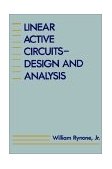
Linear Active Circuits: Design and Analysis, by William Rynone, Jr. Hardcover - 540 pages (May 1986). Our Price: Click Title for Price
cover
Buy This Book
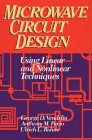
Microwave Circuit Design Using Linear and Nonlinear Techniques , by George Vendelin, Anthony M. Pavio, Ulrich L. Rohde. Paperback - 784 pages Reprint edition (May 1992). Our Price: Click Title for Price

cover
Cover not Available
Precision Frequency Control : Oscillators and Standards, by Eduard A. Gerber (Editor). Hardcover Vol 002 (June 1985). Our Price: Click Title for Price; availability iffy

Return to Contents


This Site is Brought to You by Pegasus Technologies.
We Can Help With That RF/Wireless Design Project!
Visit Pegasus Technologies
Pegasus Technologies Menu

Contents SS Glossary Pegasus Tech Navigation Home

  Tel: 865-717-9339   ||   FAX: 865-717-9904    ||   E-Mail:
This site © 1995-2007 by SSS Online, Inc. All rights reserved.
Revised June 21, 2007