|

|
By this action, we amend Part 15 of our rules to make available 300
megahertz of spectrum at 5.15-5.35 GHz and 5.725-5.825 GHz for use by a
new category of unlicensed equipment, called Unlicensed National
Information Infrastructure ("U-NII") devices.
The Commission has determined that the public interest is best serviced by increasing the maximum peak power limit as follows: 50 mW peak transmitter output power with up to 6 dBi antenna gain (equates to 200 mW EIRP) permitted in the 5.15-5.25 GHz band; 250 mW peak transmitter output power with up to 6 dBi antenna gain (equates to 1 W EIRP) permitted in the 5.25-5.35 GHz band; and 1 W peak transmitter output power with up to 6 dBi antenna gain (equates to 4 W EIRP) permitted in the 5.725-5.825 GHz band. In addition, to permit manufacturers flexibility in designing U-NII equipment, the Commission will permit the use of higher directional antenna gain provided there is a corresponding reduction in transmitter output power of one dB for every dB that the directional antenna gain exceeds 6 dBi. Also, U-NII use of the 5.15-5.25 GHz band is restricted to indoor operations only. Further, this action adopts a power spectral density ("PSD") requirement for U-NII devices that would require that the maximum power be spread across of bandwidth of at least 20 megahertz. This PSD requirement will ensure that U-NII devices spread its signal energy evenly across the band and encourages the use of this spectrum by wideband high data rate applications, but permits non-wideband operations at reduced powers. These increased power limits will permit U-NII equipment manufacturers, many of which may be small businesses, more flexibility to develop products to meet market demands. The Commission has now concluded that the proposed LBT spectrum etiquette could delay deployment of U-NII devices and hinder innovation in the development of these devices. Rather, the Commission has concluded that simple technical rules, such as PSD limits and out-of-band emission requirements, should be sufficient to ensure spectrum sharing between incumbent operations and new U-NII devices. The Commission declined to adopt a spectrum etiquette, any channelization plan, or a minimum modulation efficiency requirement because such requirements may preclude certain technologies or some of the many different concepts envisioned by U-NII proponents. We believe this action will benefit small entities by permitting these entities to develop innovative equipment to meet market demands without having to follow protocols governing use of the spectrum. |

Contributions
 Build Something for SS
We have wanted to encourage experimentation with SS techniques for a long time. When SSS was a paper publication, we published a number of "how to" articles, two generations of "Ham Hopper" transceiver designs and a number of other tidbits for the avid or budding experimenter. We even went so far as to help start a local group of Hams who wanted to build a Ham Radio Wireless Internet Transceiver. This group project never really got off the ground. From time to time we get email and FAXs from individuals, students and Ham groups asking for advice, help or "pointers" on how to get started learning something about SS technology AND building something useful for SS. This short article is the first in a series from SSS Online which will try to suggest avenues of experimentation, SS resources, design tools and we hope to give enough detailed project information so that you may actually duplicate something worthwile for SS.
Now that TAPR has a brand new SS STA from the FCC, perhaps something will finally happen in this area. My guess is that before 1997 is over TAPR will be offering some sort of SS radio / modem kit. I would sure like to help with the design and development of such a project. This may be just what is needed to really get the interest going in SS techniques. I don't know of any kit now available anywhere that can wet the appetite of experimenters, students and Hams, do you? So until TAPR puts out their SS kit, what can people do to learn more about SS technology?
We at RF/SS have had good intentions for a long time and have hoped that we could offer kits, evaluation boards or some other "you build it" version of some of our SS designs. Until now, however we have just been too busy with our commercial work AND we have not seen enough interest in this sort of thing to justify the time, trouble and expense of a new PCB layout, new firmware design and pulling together all the loose ends needed to market a kit to fill this need. Maybe the time is now right -- just maybe, there will be enough interest to get something going.
I assume that most of you would-be experimenters out there have already studied SS theory, have done some Spice, or block diagram simulation or other preparations and hopefully know what you'd like to build. If you are not sure what you would like to build or are not sure what can be built simply, we will provide a short shopping list below (based on some of past RF/SS projects):
Many thanks to Mr. Bruce Buell, BB Associates, Inc. of San Jose for the wonderful support he provided on these projects. Bruce did the digital, microprocessor and circuit board designs for all three of these projects. He also helped immensely with Orcad Schematic capture, system integration and test / debug of all of these projects.
Click here to go to Bruce's WEB Site
email Bruce: [bbuell@practical-designs.com]
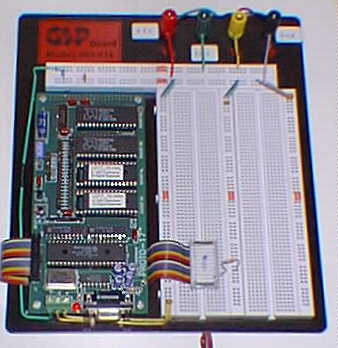
PIC17C42 All Firmware PN Generator - De-Speader (Use for TX or RX) -- Will generate arbitrary PN Patterns up to over 2 MHz!
 Click here for details on the PIC17C42 Firmware PN Generator Design
---------------------------------------------------------------------------------------------------------
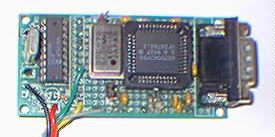
PIC16C84 - AD7008 DDS for Fast Frequency Hop LO (Use for TX or RX) -- Uses 50 MHz clock -- Outputs sine waves to 16 MHz -- will jump frequencies up to 100,000 hops per second!
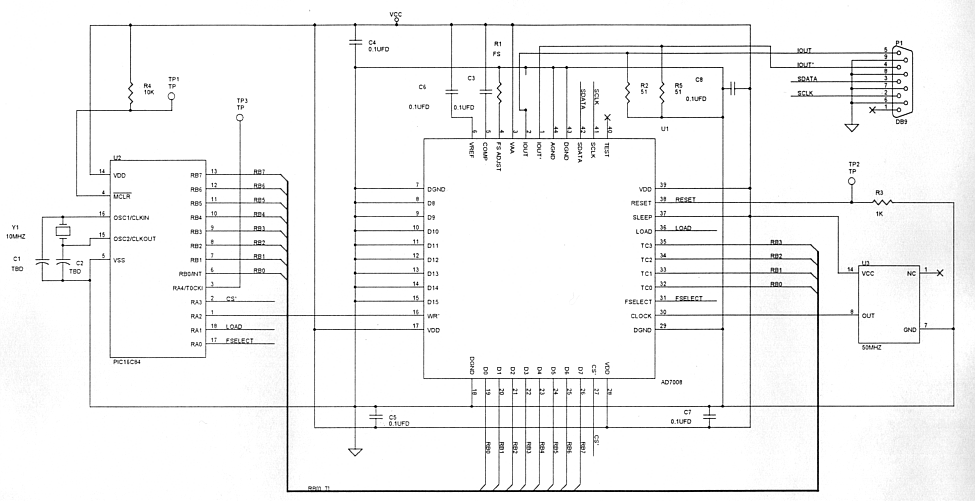
HOP2 Schematic
|

 Download Dr. DWG QuickView .dxf File Viewer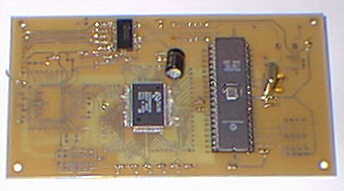
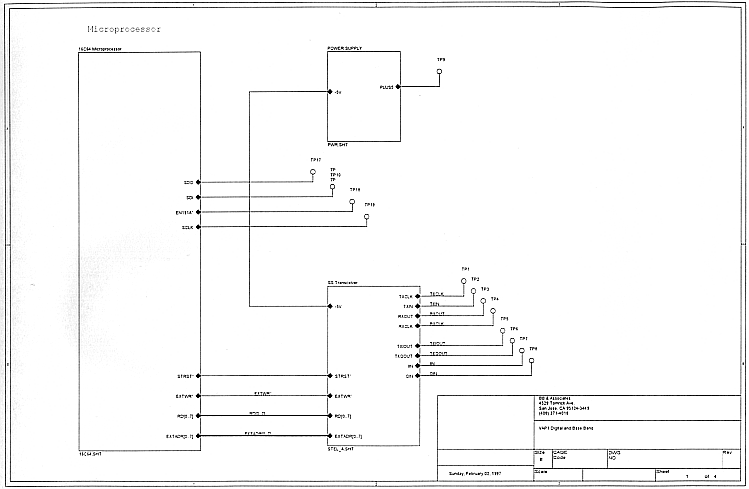
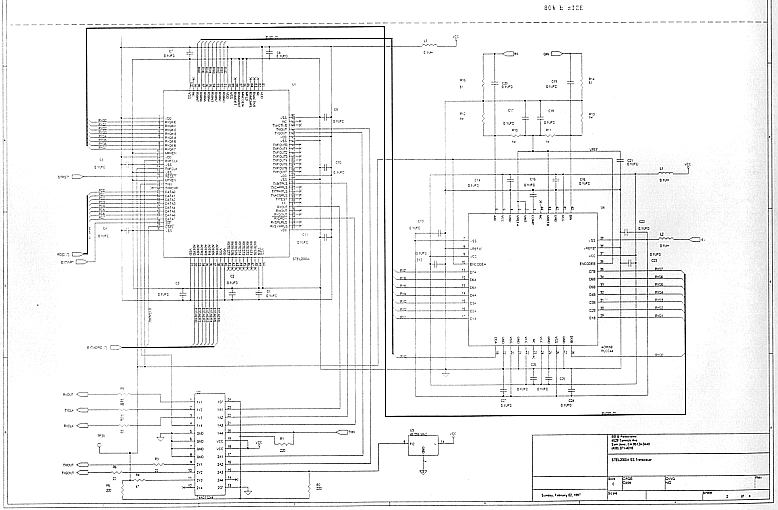
"Vapor1" STEL based Modem Schematic page 2/4
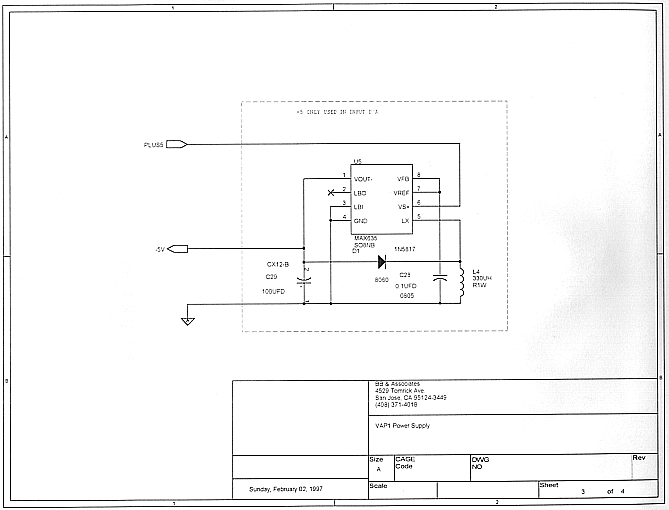
"Vapor1" STEL based Modem Schematic page 3/4
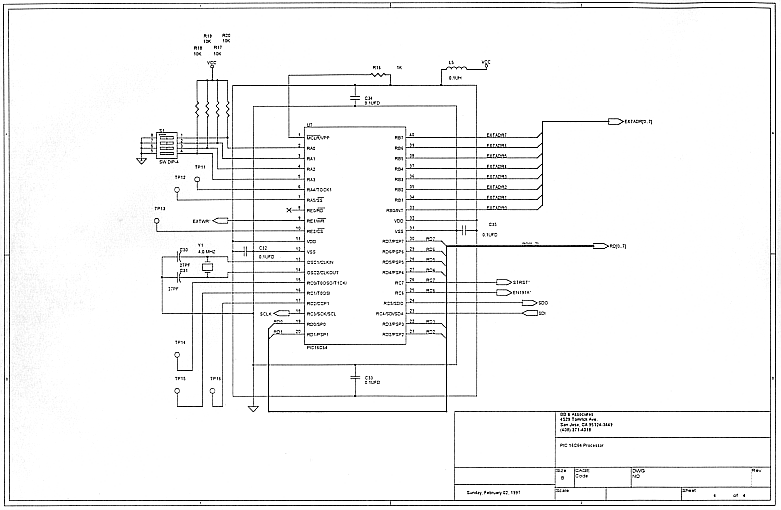
"Vapor1" STEL based Modem Schematic page 4/4
|
 Read Spring 1996 What's New Pages (4/29/96)
|